
October 28, 2025
Guide to Choosing the Right Paneer & Cheese Processing Equipment for Your Dairy
Introduction
The dairy industry is rapidly growing with increasing demand for high-quality paneer and cheese. For dairy plant owners and cheese manufacturers, choosing the right paneer & cheese processing equipment is essential to ensure consistent quality, higher yield, reduced labour, and compliance with international hygiene standards.
In this guide, we’ll walk you through the key factors in selecting modern processing machinery and how Dairy Automation Pvt. Ltd. (DAPL) helps enhance dairy productivity and performance.
Challenges in Paneer and Cheese Processing
Common Pain Points
- Inconsistent Quality: Uneven curd texture and block size.
- High Labour Costs: Manual operations slow down production.
- Inefficient Processes: Increased wastage from outdated systems.
- Hygiene Compliance Issues: Difficulty maintaining CE, ISO, and FDA/3-A standards.
- Scaling Limitations: Low automation restricts production growth.
How DAPL Supports Dairy Growth & Efficiency
With over 20+ years of experience, DAPL provides advanced dairy automation solutions customized for every plant.
End-to-End Turnkey Solutions
- Conceptualization: Customized based on production goals.
- Plant Layout & Design: Optimized flow and space utilization.
- Automation: Integrated systems for streamlined operations.
- Installation & Commissioning: Complete onsite implementation.
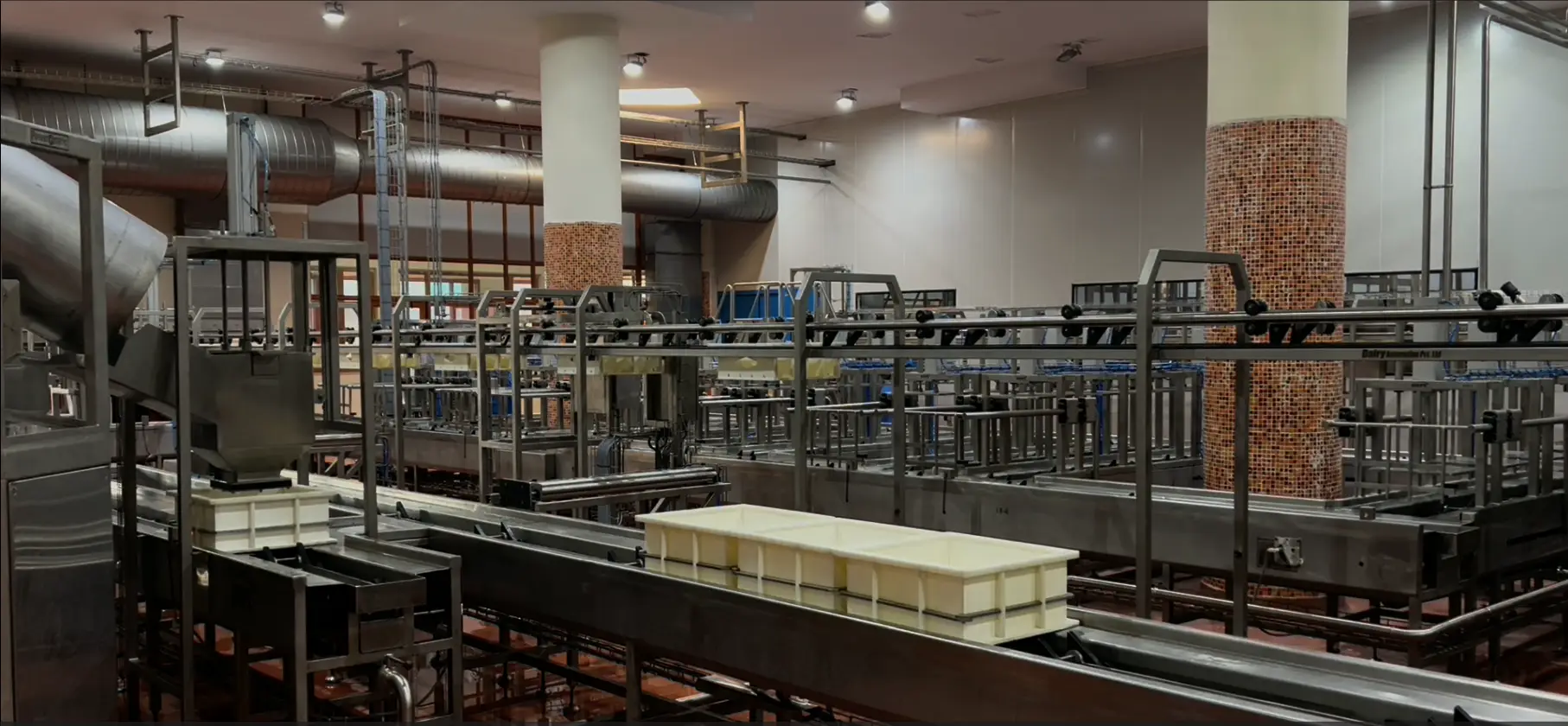
Advanced Paneer and Cheese Processing Machinery
DAPL offers high-performance equipment to enhance dairy operations:
- Automated Coagulation Vats: Consistent curd formation for paneer & cheese.
- Paneer & Cheese Pressing Machines: Uniform block shaping with precise control.
- Dip Chilling Vats: Rapid cooling for superior texture.
- Ultrasonic Cheese & Paneer Cutters: Accurate slicing with minimal wastage.
- Double O Vats & Horizontal Vats: Higher capacity curd processing.
- CurdMaster & Block Former: Efficient cheddar and industrial block production.
- Micro-Perforated Moulds: Faster whey drainage, better weight control, and improved block shape.
Automation, Hygiene & Operational Efficiency
- Reduced manual handling through fully automated systems.
- Equipment designed to meet CE, ISO, and FDA/3-A regulatory standards.
- Higher yield, improved hygiene, and increased plant efficiency.
Aftersales Support You Can Trust
- Technical training for plant operators.
- Maintenance support and operational guidance.
- Continuous improvement for long-term performance.
Innovations & Demonstrations
- Live Machinery Demos: View systems in action.
- 3D Virtual Plant Walkthroughs: Understand flow and layout before deployment.
- Micro-Perforated Mould Technology: Unique solutions for enhanced drainage and final product quality.
How to Select the Right Paneer & Cheese Machinery
- Assess Production Requirements: Define daily output and product range.
- Prioritize Automation: Reduce errors and labour dependency.
- Ensure Hygiene Certification: Check CE, ISO, FDA/3-A compliance.
- Choose Scalable Systems: Support future capacity expansion.
- Request Demonstrations: Validate performance before investment.
- Evaluate Aftersales Service: Essential for smooth functioning.
FAQs: Paneer & Cheese Processing Equipment
Q1: What types of cheese can DAPL machines produce?
Cheddar, mozzarella, paneer, processed cheese, and specialty cheeses.
Q2: Can DAPL machines be integrated into existing plants?
Yes, systems are designed for seamless integration.
Q3: How do micro-perforated moulds improve quality?
They provide faster whey expulsion, better moisture control, and consistent block shaping.
Q4: What aftersales support does DAPL offer?
Training, maintenance, and plant optimization assistance.
Q5: Are DAPL machines certified?
Yes, equipment complies with CE, ISO, and FDA/3-A standards.
Conclusion
Investing in the right paneer & cheese processing equipment is the key to scaling production while maintaining quality and hygiene. With DAPL’s engineering expertise and innovative technology, dairy manufacturers can achieve better efficiency, consistent products, and long-term operational success.