March 10, 2026
How Modern Automated Equipment Improves Paneer Yield and Consistency
Paneer is one of the most widely consumed fresh dairy products in India, and demand continues to grow across retail, food service, and institutional markets. For dairies involved in paneer manufacturing, maintaining consistent texture, controlled moisture levels, and higher paneer yield is essential for efficient operations.
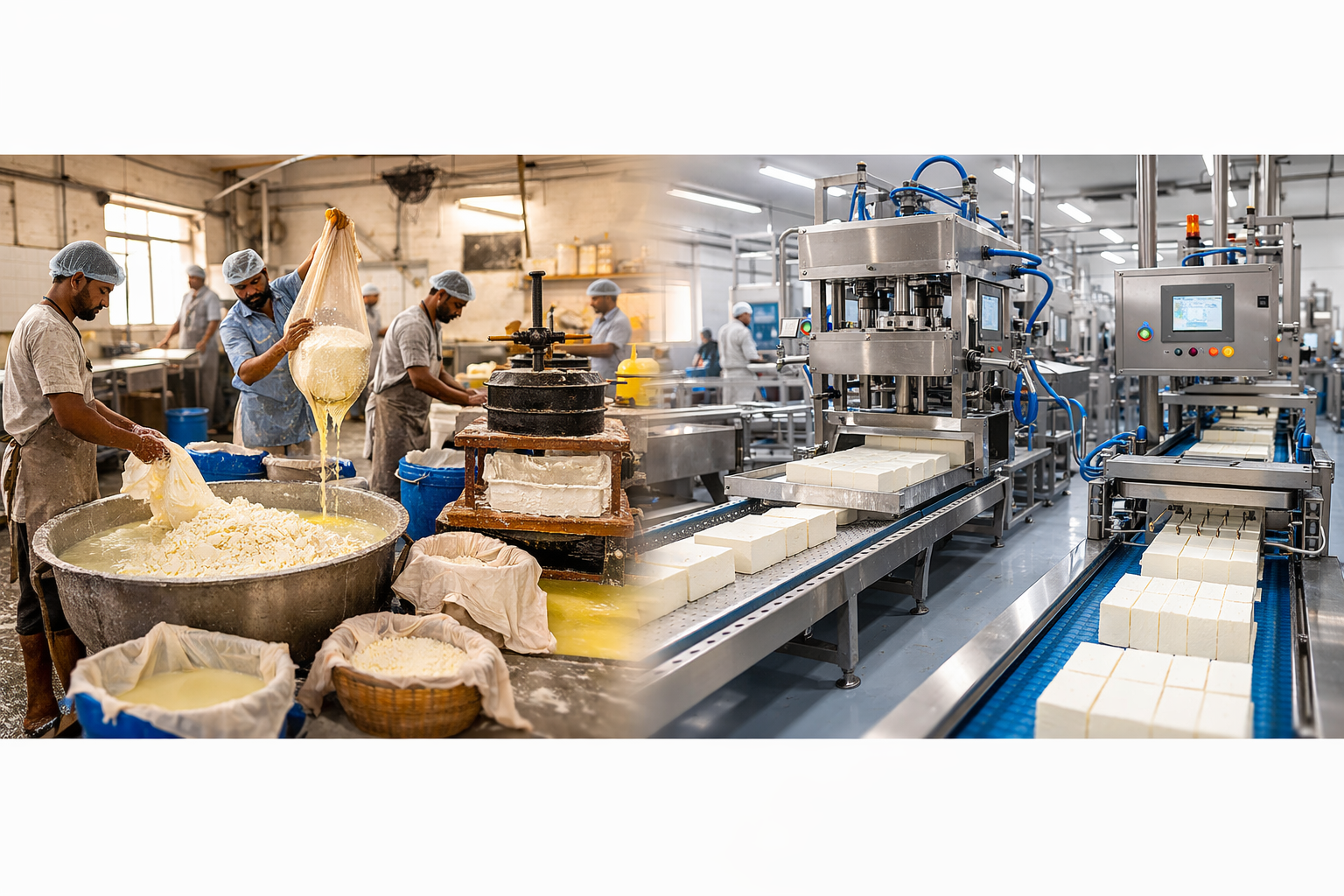
However, traditional paneer production methods rely heavily on manual handling and operator experience. Variations in coagulation, moulding, and pressing often lead to inconsistent paneer quality, longer production time, and higher labour dependency. To address these challenges, many dairies are now adopting modern automated paneer manufacturing equipment that improves process control, hygiene, and production efficiency.
Challenges in Traditional Paneer Manufacturing
Traditional paneer production typically involves manual coagulation, cloth-based whey drainage, and weight pressing. While these practices are common, they can create several operational challenges.
Inconsistent Texture
Manual handling during coagulation and moulding can lead to uneven curd formation, producing paneer blocks with non-uniform texture.
Variable Moisture Content
Cloth-based whey drainage and uncontrolled pressing can cause fluctuations in moisture levels, which affects paneer firmness and shelf stability.
Lower Yield Recovery
Improper whey drainage and inconsistent pressing pressure may result in the loss of fine curd particles, reducing overall paneer yield from milk.
High Labour Dependency
Traditional paneer manufacturing requires significant manual work for mould filling, pressing, whey removal, and block handling, increasing labour requirements and slowing down production.
How Automated Paneer Systems Improve Production
Modern paneer plants are gradually shifting toward automated paneer manufacturing systems that help standardize production while improving operational efficiency.
Controlled Heating and Coagulation
Automated systems ensure precise temperature control and uniform mixing, enabling consistent curd formation and better protein recovery during paneer production.
Micro Perforated Paneer Moulds
Modern paneer systems use micro perforated moulds that allow efficient whey drainage while maintaining the structure of the curd. These moulds help produce uniform paneer blocks, reduce product loss, and improve hygiene compared to traditional cloth moulding methods.
Automated Progressive Pressing Systems
Automated progressive pressing systems apply pressure gradually in controlled stages. This allows whey to drain evenly while maintaining the desired paneer structure. Progressive pressing helps achieve consistent paneer texture, uniform moisture distribution, and stable block formation.
Role of DAPL Automated Equipment in Paneer Manufacturing
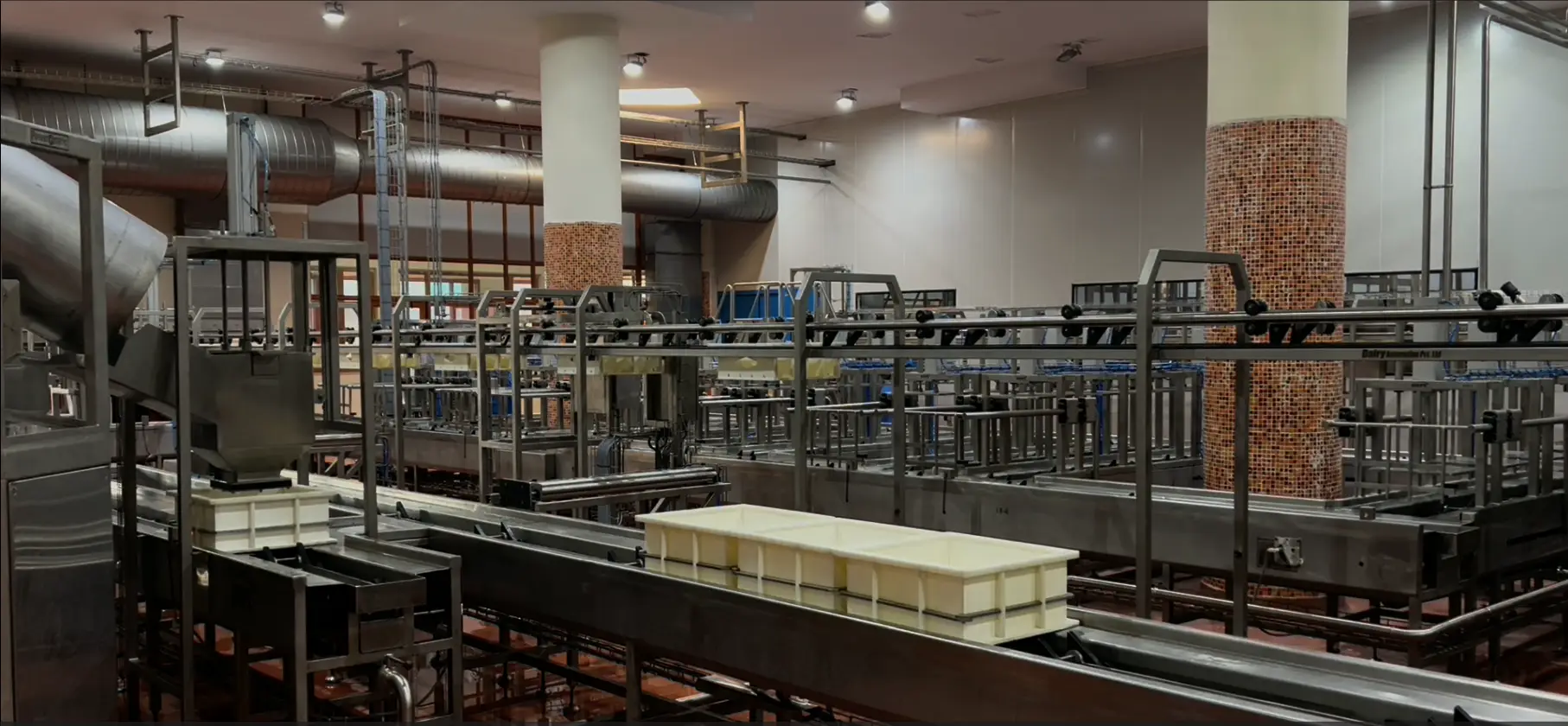
Many dairies are now adopting DAPL automated equipment to improve efficiency and bring more structure to paneer production. Automation helps reduce manual handling, improve hygiene, and maintain consistent production parameters across batches.
DAPL delivers complete turnkey solutions from milk preheating to paneer cutting machines. This structured approach helps dairies streamline paneer manufacturing, reduce production time, lower labour dependency, and maintain hygienic and consistent paneer production.
You can also explore the complete range of paneer manufacturing equipment here:
https://dairyautomation.com/wp-content/uploads/2025/11/DAPL-Paneer-Equipment-Brochure.pdf
Conclusion
Traditional paneer manufacturing methods often result in inconsistent texture, variable moisture levels, and lower yield recovery due to heavy reliance on manual processes. By introducing automated paneer manufacturing equipment, micro perforated moulds, and progressive pressing systems, dairies can significantly improve paneer yield, consistency, and production efficiency while maintaining the expected characteristics of paneer.